Saturday, January 8, 2011

It may take a genius to shop for smart TVs

las Vegas (CNN) -- If so-called "smart TVs" are so clever, why do we feel so dense when trying to compare them?

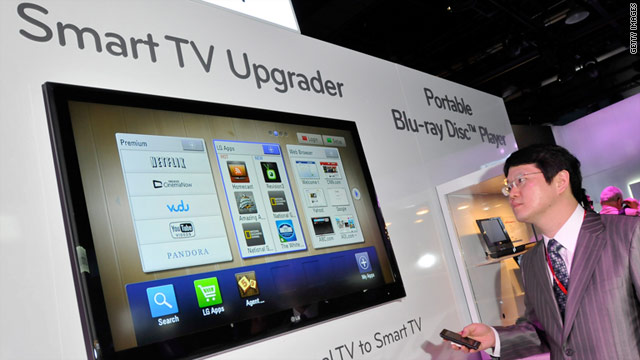
Each television manufacturer has its own take on what the software that lets a TV connect to the internet should look like. These myriad smart TVs, with their varying degrees of technological intelligence, were on display throughout the Consumer Electronics Show.

Many of the systems developed independently by the various companies look strikingly similar, but offer different features and content.

Most provide access to YouTube's and Netflix's streaming video services. Some, like Sharp's Quattron series, have Pandora for internet radio and Facebook. Others let you tweet from the TV screen using a keyboard remote.

Samsung's new Web-connected TV and LG's Smart TV platforms can stream video from a computer or from a few smartphone models using a protocol called DLNA. Setup isn't a cakewalk.

Compounding the confusion is when TV makers put lesser-known services, like Vudu, Rovi or CinemaNow, front and center.


To top that off, several major TV manufacturers produce separate models that run completely different platforms.

Sony's Bravia TVs can access Hulu and a number of other services. But Sony's Google TV sets can't get Hulu.

Toshiba's Net TV system can do Skype, along with other applications. But its Yahoo Connected sets have another set of apps that look and perform differently.

Samsung introduced the fourth version of its connected TV platform at CES, and signed partnerships with Hulu and Adobe. Samsung also announced that it would make a Google TV set and a set-top box, both of which can run Adobe's software but not Hulu's.

"That is different than our smart TV," Samsung president Tim Baxter said in an interview, "but for some consumers who are looking for that solution, we want to be able to serve that."

Another advantage of having products with Google's software on them: "The brand name means something," Baxter said. The name Google resonates with certain potential customers that Samsung may not impact.

Google and Samsung partner in various areas, most tightly in mobile. Samsung says it wants to offer a wide array of platforms. That's consistent with how it runs its phone business, building smartphones that use either Google's Android or Microsoft's Windows Phone 7.

"We want to offer choice," said David Steel, Samsung's marketing executive. "You won't see us choosing one platform over another."

But Google TV is stumbling over obstacles from TV networks that don't want their internet content available on the big screen. Add to that, the search-centric software has been plowed by critics for being poorly design.

Perhaps so the company can retool, Google TV's footprint at CES is small, being showcased sparingly by early partners.

"Being able to use your television set as an internet-search appliance really isn't what people think of when they come to the TV," TiVo CEO Tom Rogers said in an interview. "They're looking for a television experience. ... That's something that you have to be very television-focused, very television-centric to deliver."

TiVo's Premiere box can access some internet services, in addition to recordings. Several other companies are producing Web-connected boxes that can hook up to TVs, but those could be less desirable as new TVs come with Wi-Fi functions and Web features built in.

Google's inability to find the right formula for TV software, like it did for smartphones with Android, leaves a major opportunity for software makers.

Google's longtime competitor, Yahoo, makes an operating system for the big screen. Startups like Boxee are trying to fill this niche by creating attractive internet software that is provided to manufacturers for free. So far, they've had limited success.

So unlike the smartphone area, which is dominated by just a few players, there are at least a dozen platforms with different sets of apps, interfaces and features.

After sales of LCD TV sets grew last year, sales are expected to slow 13% this year, according to a report by research firm DisplaySearch. In addition, smart TVs may not prove to be a big selling point. Samsung's Baxter says less than half of people who buy the company's internet-enabled TVs actually connect them to the Web.

For Samsung, standing out in a sea of smart TV platforms could come down to unique methods for connecting its various products together.

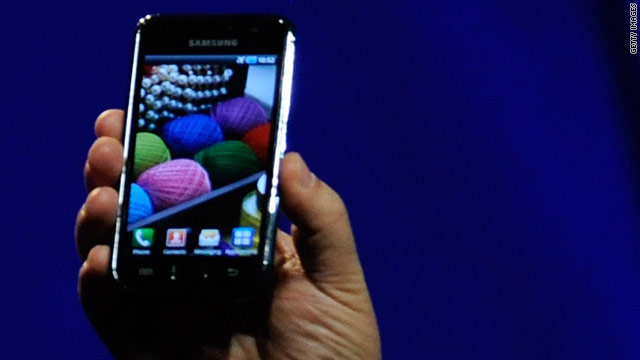
The Samsung TV platform can run third-party apps, like a smartphone does, and some of them can even interact with a phone. For example, there's a Samsung TV app that lets you draw on a Galaxy S phone and see your artwork on the big screen.

"Where we think we have a big opportunity going forward is the link between 4 inches, 7 inches and 55 inches," Steel said, referring to the screen sizes of Samsung's smartphones, tablets and big-screen TV.

Friday, January 7, 2011

Alleged iPad 2 case is 'just a guess'

Las Vegas (CNN) -- Tech-heads are drooling over the prospect of a second-generation iPad, widely expected to be unveiled in the next month or so.

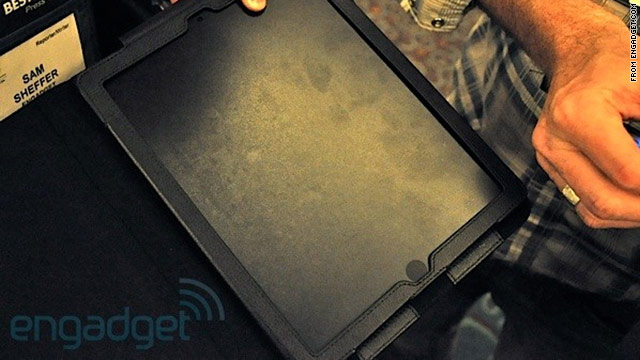
So when a blogger at Engadget spotted an apparent case for the iPad 2 here at the Consumer Electronics Show, he wrote about new features that may be found on the device.

Most notably: A front-facing camera, which could be used to video conference.

And a slightly different size.

The only problem: The case's specifications were based on guesses about what the new iPad might be like, not inside information from tight-lipped Apple, according to the company that made the case.

"I think we all know -- just like the iPhone -- there's going to be another version [of the iPad]," said Patrick Tarpey, spokesman for Dexim, which briefly displayed the case.

Dexim doesn't know what the new iPad will look like, he said. It based the prototype on rumors that have been, like usual, circulating on blogs.

"It's almost just a guess," he said of the design.

Dexim pulled the case from its booth at the Consumer Electronics Show after it was reported that it might have been designed for the iPad 2.

The company declined to show the case to CNN.

"It was a single model. We weren't really saying this was a possible iPad 2 case," he said.


History suggests Apple could announce a new generation of the iPad later this month, since that's the time frame it followed when it revealed the original iPad. The company typically sticks to pretty uniform announcement schedules. And it rarely if ever releases information about its upcoming products until a formal announcement event.

As far as what the new iPad will look like? No one really knows for sure.

How to make sure your smartphone payments are secure

(Mashable) -- Consumers want mobile payments. So do the mobile carriers, device manufacturers and point-of-sale (POS) vendors. Amex, Visa, MasterCard and all of the other payment providers also have something to gain.

Payment is the next frontier of mobile technology and is becoming a hot area for innovation helping to make carrying a wallet obsolete.

But, recent high-profile security breaches aren't helping us drive toward that reality. Even outside of the mobile arena, Firesheep democratized data theft for anyone inclined, and the recent challenges by PayPal via iTunes illustrate that no brand is safe or sacred.

Remember back in 1998 when people were scared about buying things online? We eventually figured out how to do it, and moreover, do it right.

We are now at the same crossroads with mobile. Mobile is a completely different animal however, and one that comes with a full host of new threats. We cannot simply apply our dated, web-based security best practices to the mobile domain. In fact, I'd argue that mobile security is critical to the maturation of the web itself, in 2011 and beyond.

Whether you're a consumer, developer or investor delving into mobile payments technologies for personal or professional use, here's why you should care and the top factors to consider when evaluating technologies in the coming year.

Security is not sexy but it affects your financial health

We, an industry of entrepreneurs, investors and builders of great software, too often turn a blind eye to the reality of security vulnerabilities. There are exponentially more of them as the pace of technology innovation quickens.


Mashable: Why small businesses should care about mobile payments

Security means directly addressing risks and the reality is we really don't like people raining on our parade. To date, security and peace-of-mind has been represented as a checkbox, not a core competence or the make-or-break software issue that it should be.

Even the most well-respected brands have challenges in this regard --- as illustrated by PayPal and Bank of America's mobile payment efforts.

In fact, the more and more we do on our mobile phones, the more enticing it becomes to take advantage of holes in mobile security. There is a huge opportunity to secure the mobile lifestyle and enable trustworthy payment applications.

Security is something we've focused on at my company, and it's the reason we're able to work so closely and effectively with point-of-sale systems and vendors in the hospitality industry. The security of our app is not just a feature; it's the heart and soul.

Continuing to ignore the gravity of mobile security threats as the web matures substantially increases the likelihood that your credit card information will be stolen while your bar tab is open, while it's being transmitted over the wireless networks, or while it's stored in massive databases.

Mashable: How to accept credit card payments on mobile devices

Even if a mobile payments provider or bank has the best fraud and theft protection, the odds are high that you will still need to request a new card from your bank and ensure that it doesn't process any of the foreign charges before you can resume your life.

In the worst case scenario, you have to navigate a slew of identity theft issues and dedicate unknown hours of precious time re-securing your personal data, identity and financial security -- instead of living your life.

Payment methods and what "encryption" really means

There are many different options available to companies, services and apps when initiating a mobile transaction. These include:

-- Web-based transactions (through the browser)

-- SMS (via text messages)

-- NFC (near-field communications, usually a sticker put on the phone and newly popularized because Apple and Google (Google) are rumored to be putting NFC inside of their next-generation phones)

-- Tokenization (like paying for a ticket at a theme park, i.e. converting first into an alternate currency)

-- And many more options.

These technologies will all succeed in completing a transaction, but they all rely on some type of encryption to enforce security along the way. For all intents and purposes, encryption is a process by which information is transformed so that it is unreadable to anyone except those possessing the key or the decryption process.

A wide variety of encryption processes or schemes have been developed and employed to safeguard our payment data. To set your fears at bay, companies offer assurances of the "best" encryption technology, the best-guarded servers, or the standard certifications by McAfee and Symantec.

The truth is that today's dominant approaches to mobile security date back to 1995 or earlier and seek to conduct mobile transactions in the same way as traditional transactions -- by treating the phone like it is just another computer, adding in some extra encryption for good measure.

Mashable: Why your smartphone will replace your wallet

But, mobile has very different vulnerabilities, and although encryption is an important piece of the puzzle, it isn't the whole solution.

Ask about intermediaries

What you should look for is establishing a direct connection between your phone and the venue's point-of-sale (POS) system (e.g. a cash register or payment console).

Companies that do this mitigate threats from middlemen, and the fewer intermediaries, the better. Also, you should care about whether your information is processed locally at a venue or pushed to a larger, third-party server farm somewhere else.

The bottom line is that fewer steps and company touches is better. You might not always know explicitly whether this is the case, but you should get in the habit of asking.

Better understand where your data lives

Above and beyond everything else, common sense dictates: If there's enough money in the bank, someone will try to steal it.

7-Eleven only carries $20 cash at night for a reason. Your payment data should solely be stored on your phone and not in someone else's database with tens of thousands of other credit card numbers. It's hard to steal from someone if there's no money in the safe. This is the only thing that truly deters hackers from going after a big score.

Keeping your payment data solely in your phone is equivalent to keeping your credit card in your wallet. For consumers, you can usually find out where data is being stored by perusing a website carefully or reading well-researched articles and reviews.

Journalists are doing a better and better job of ferreting out where your data lives, and how it is being passed around.

For app developers and payments services, keeping the data out of their servers absolutely involves more work and clever engineering.

It's hard to avoid any third parties (whether for processing or hardware), because those third parties can make things a lot easier on a startup. It's worth it to start down this path if you haven't already, since consumers will increasingly demand it.

Be confident the data's encrypted

The very best approaches to mobile security never send your payment information in any way that an enabled hacker in proximity could intercept your data. It should be a priority to have industry-standard encryption. Customer smartphones talk directly to the POS. Ideally vendors and companies won't even need this extra data in the first place.

Your cheat sheet

In sum, the stakes are high when the smartphone replaces the wallet. We have to rethink where the data lives and who has access to it, convenience notwithstanding. We're all responsible for asking the hard questions to be informed consumers when we support a carrier, manufacturer, vendor network and technology.

Here's your cheat sheet for owning your mobile transaction financial health. I urge you to ensure that your credit card information is:

-- Only sent to the venue's POS system, rather than passing through third party services.

-- Only stored on your phone, where it's safest, and not in the cloud.

-- Always encrypted when it is sent to the POS system, where the transaction is taking place.

Tuesday, January 4, 2011

10 websites to watch in 2011

(Mashable) -- There are more than a trillion URLs in Google's index. Yes, that's a one with twelve zeros after it. And Google crossed that milestone two and a half years ago. With so many sites on the web in 2011, how do you know which to pay attention to?


Mashable's editors haven't quite visited a trillion pages, but we've checked out a lot in the past year, and we've compiled a list of 10 websites we think are poised to have big years in 2011.

Some of these are relatively new sites we think will catch the mainstream's attention next year and others are older sites that we think will finally hit the big time in 2011.

Check out our list below and let us know in the comments which websites you have your eye on for the coming year.

Kickstarter

Kickstarter, a crowdfunding platform for creative endeavors, was founded in April 2009 and had what many would consider a break-out year in 2010. But the site could be poised for an even bigger 2011.

The unique all-or-nothing approach to funding has struck a chord with both creators and funders and is allowing enterprising individuals to bypass traditional establishments to create films, music albums, events, products and even new companies.

Kickstarter helped hundreds of projects raise millions of dollars in 2010. Look for that number to continue going up in the next year.

OpenLeaks

OpenLeaks may very well be the WikiLeaks alternative in 2011, not as a destination, but as an enabler for media organizations to do the same as WikiLeaks.

OpenLeaks, unlike WikiLeaks, seeks to be an intermediary between whistleblowers and other organizations and includes former members of WikiLeaks, most notably, Daniel Domscheit-Berg.

The site will focus more on being a technological service for news organizations, likely enabling them to make it easier for their readers to submit such leaks to their own sites.

This may keep the scrutiny from politicians and officials -- something WikiLeaks has had to battle with this year -- away from OpenLeaks, as they won't be the ones publishing the material.

Klout

As social marketing starts to surpass traditional marketing methods, companies will look for influential individuals who can rep their product well. Klout is one of the tools that companies use to gauge who the social influencers are. Look for them to make some big moves in 2011.

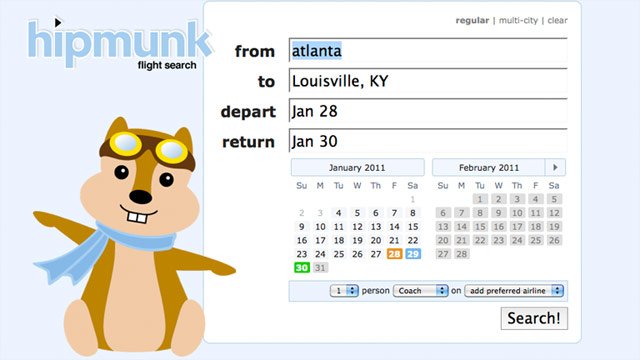
Hipmunk

Hipmunk is fixing everything that's wrong with flight searches with a tool whose usefulness is immense. Once people get used to the interface and start telling their friends about it, Hipmunk's popularity will skyrocket.

Gilt Groupe

Gilt Groupe, which hired its 500th employee in 2010, is rapidly expanding into new verticals (such as location-specific group buying deals, a la Groupon) and territories (like Japan).

Its next target? Full-priced retail. It's launching a men's e-commerce site in February. Expect to see further development in that area and the geographical expansion of its existing products in 2011.

Diaspora

Diaspora, the open source social network platform, released its code and opened up to private alpha invites recently. The platform was dubbed the alternative to Facebook, during Facebook's privacy fiasco, and generated a lot of buzz.

But as the platform opens up to more users in 2011, we'll see how people react to it and whether it's something that will actually be an alternative option to the social networking giant.

Quora

Quora has clearly found its place with the early adopter set and a number of active, high profile users who make the service interesting to engage with. In 2011, it will be interesting to see if the company is able to expand its audience while maintaining the quality Q&A that has made it so attractive to users thus far.

In turn, we'll see if it's the next big thing or has a destiny more like that of FriendFeed, a community that was initially popular with early adopters but never found a mainstream audience (but ultimately found a home at Facebook).

Grooveshark

Among the many music streaming services in existence today, Grooveshark is one of the few that is both free and available to Europeans.

It has a sleek, Google-like interface and a database with a huge amount of music (the service lets anyone upload music, so you can find many obscure, unknown, local or upcoming bands there).

It also has an interesting array of features, such as skinnable interface, playlists, music sharing and promotions that don't feel like ads, and it relies on a freemium business model that offers just enough to entice users to subscribe.

Barring possible problems with copyright holders and cash flow issues, which always threaten to shut down services like this, Grooveshark might be the next big thing in online music.

Drupal

WordPress might get most of the love in the open source CMS space (for good reason), but Drupal provides a powerful option for individuals, organizations and brands that want to power complex, robust sites.

With Drupal 7 set for release in early 2011, the Drupal team is actively addressing the one area the CMS has always received criticism: Usability.

Thanks to shops like Development Seed and Lullabot, the Drupal ecosystem is becoming extremely impressive. Acquia, the commercial company from Drupal founder Dries Buytaert, continues to raise funding and offer an array of commercial and support services that better enhance the platform as a whole.

Foursquare

I expect Foursquare to scale to an even bigger level in 2011. I won't be surprised if it starts to acquire smaller companies or make a major move to Silicon Valley, in order to make that happen.

Nintendo warns against youngsters playing its upcoming 3-D system

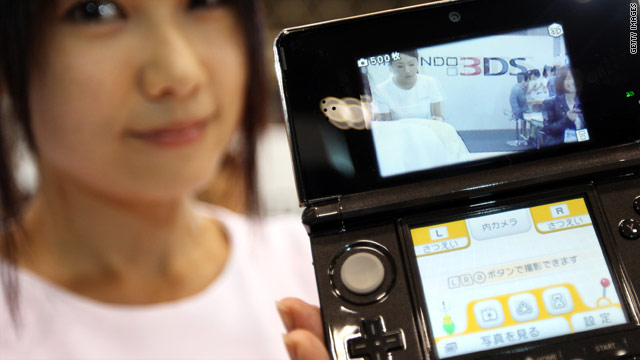
(CNN) -- Nintendo is warning young children against playing 3-D video games on its upcoming handheld gaming system, the Nintendo 3DS.

Kids age 6 and younger who play the 3-D games may have the growth of their eyes stunted, the company said in a statement on its Japanese website.

The warning notes that parents can turn off the 3-D functionality of the handheld 3DS. They can also set passwords that keep kids from using that feature.

The statement also asks everyone who plays the 3-D gaming system to take periodic breaks from the games as often as every hour or 30 minutes.

The warning follows many others on the potential health effects of three-dimensional entertainment. TV makers have issued warnings about young people, pregnant women and even drunk people viewing 3-D TV, noting that the medium may cause nausea, dizziness and seizures.

In one such warning, Samsung said those risks are heightened in kids.

Nintendo has largely gotten favorable reviews for the 3DS system, which lets players see games in three dimensions without wearing the clunky glasses that are required for most 3-D television and movie displays.


The company debuted the 3DS at a trade show earlier this year.

The $300 device is scheduled to hit stores in Japan in February and then in the United States in March.

iPhone alarm problems persist into the workweek

(CNN) -- The first workweek of 2011 got off to a bad start for some Apple iPhone users when their phone's alarm failed to activate properly for a third consecutive day.


Apple had acknowledged over the weekend that some alarms would not work properly on Saturday and Sunday, but said the problem would resolve itself on Monday, according to numerous reports in the tech press.

As the workweek dawned, however, the social networking site Twitter was awash with reports from users who said their alarms had failed to sound.

Among them was Jeana Lawrence, a marketing executive from Houston who wanted to wake up at 5:30 a.m. but didn't stir until 7:19 -- 41 minutes before she was supposed to report to work.

She missed her workout and had to skimp on breakfast.

"My schedule is like clockwork and when the alarm clock does not work, my schedule does not work," she said.

Lawrence said she was aware of the alarm issue that cropped up over the weekend, but took Apple at its word that the problem would resolve itself on Monday.

"Apple is usually reliable when they make public statements about bug fixes, so I'm surprised that it did not work today," she said.

Apple did not immediately return repeated telephone messages left with its media hotline on Monday.

The problem reportedly involves alarms set for one-time use, not repeating alarms that are set to sound, for instance, every weekday. To dodge the problem, the company told users to set all of their alarms as recurring ones during the weekend, according to press reports.

It's unclear how extensive the problem was on Monday. Some users on Twitter reported their alarms sounded properly.

But many of those whose alarms didn't work were frustrated.

"So, is my iPhone alarm just not going to work this year?" one Twitter user posted.

Heather Rasley, community relations manager from Naples, Florida, said she wasn't upset with Apple because of the glitch, even though it caused her to miss her 5:30 a.m. wakeup and a chance to use the family car to run some much-needed errands. Her mother took the car instead.

"Bugs happen," said Rasley, who wasn't aware of the glitch when she set her alarm. "But it's bad PR to not notify users of this type of issue directly, instead assuming that they will be plugged into media over a holiday weekend to catch the company's statement."

The problem is the second for Apple's alarm clock application since November.
(ALEX RODRIGUEZ)
In the first case, the application didn't properly register the changeover to standard time from daylight saving time for some users, causing alarms to activate too late.

That problem, which affected only recurring alarms, was repaired with a software patch.

10 million Galaxy S phones sold

(WIRED) -- Selling 10 million units of any product in its first six months of initial release is nothing to scoff at. In the world of smartphones, it's certainly a number to notice.

That's why our eyebrows perked up when we read Samsung's e-mail this morning, announcing that the company's Android-based Galaxy S model has sold more than 10 million units worldwide since its debut in late June.

It's an admirable number, although not quite in the same league as Apple, which sold 14.1 million iPhone 4 phones during the third quarter of 2010.

And it definitely gives RIM reason to worry: RIM sold 12.1 million phones in the third quarter, down 2.8% from the previous quarter, according to Comscore data released in November.

The battle for operating system share has been heated between the big three contenders: Apple's iOS, Android and RIM's Blackberry OS. But Android has seen a surge in attention in 2010.

More than 40% of U.S. customers purchasing smartphones over the last six months have chosen Android-based phones, according to a recent report released by Nielsen, beating out the percentage of people who chose Apple, which rests at 26.9%.

But in the same Nielsen data, Apple shows its slight (if dwindling) edge in the overall number of phones out there. Apple's iOS has an overall U.S. market share of 28.6%, edging out Android, which rests at 26.1%. RIM's Blackberry OS comes in only slightly behind Android at 25.8%.


There's been a steady upward trajectory of Android-based phone sales over the past two years. Motorola's Droid sold an estimated 100,000 units over the weekend of its release in late 2009. It took the Droid 74 days to reach the 1 million mark, according to research firm Flurry Analytics.

But it took Samsung a month less to reach the same point with the Galaxy S. The company said it had sold 1 million in the first 45 days since launch.