Friday, April 8, 2011

Android still growing, but some developers frustrated

(Wired) -- Google's Android platform has been growing steadily since its release in 2008. Now, one out of every three U.S. smartphone owners is using an Android-based device, according to a recent report.
So why aren't developers more excited about the platform?
Of the 69.5 million Americans who owned smartphones as of the end of February, 33 percent used Android devices, according to a report from ComScore. It's a leap of 7 points in a period of only three months.
The growth of Apple's iOS remained stagnant, seeing only a 0.2 percent increase over the same period of time. Competitors Microsoft, HP and RIM were the ones who suffered as Android grew, with drops of 1.3 percent, 1.1 percent and 4.6 percent, respectively. The five companies' smartphone market share is shown in the table below.
The growth is partly a numbers game. One of Google's advantages is the sheer number of phone models running Android. Hardware makers have announced more than 10 different Android devices in the first three months of this year, far more than those running Google's competitors.
By contrast, HP announced two new phones in February (the first mobile phone hardware release from the company in far too long), only one Windows Phone 7 device has appeared in 2011, and we're probably not going to see the iPhone 5 anytime soon.
For all of Android's success, however, the platform has yet to fully satisfy its application developer base.
Baird Research shared the results of a recent developer survey with Wired.com, showing that more than 50 percent of developers questioned "view fragmentation" -- the disparity in software versions across device manufacturers and handsets -- to be a "meaningful or serious" problem. Developers also expressed concern over the fragmentation of the app ecosystem on Android, saying they generally preferred a "unified, single-store experience like Apple's App store."
For customers who enjoy Android's openness, the lack of a single app store is hardly a problem. Those who wish to go outside the walled garden of Apple's iOS (but don't necessarily want to jailbreak their phones) can do so fairly easily on an Android device -- or they can use alternative app stores, like Amazon's.
But for developers who wants their programs to make serious money, a nonunified app ecosystem may be less than desirable. Fully 74 percent of respondents said developing for Apple's iOS gave the best opportunities for paid-app revenues, and twice as many developers claimed their apps were more visible in Apple's app store than they were in the Android Market.
We may see a shift in developer attitudes as Android continues to mature and further improve its app ecosystem. Google launched the Android Market web store in February, and just last week it officially enabled in-app billing, allowing developers to charge customers for items purchased within an application.
In addition, a several developers have made six-figure revenues from Android apps, with a couple scoring million-dollar paydays.
With the promise of big money, and a huge base of customers to target, developers have a strong incentive to continue coding for Android. Indeed, despite the complaints, 71 percent of respondents said that they have developed apps for the platform.
Whether they're currently satisfied with Google's OS or not, it looks like developers will continue writing code for it.

Apple's three biggest weaknesses

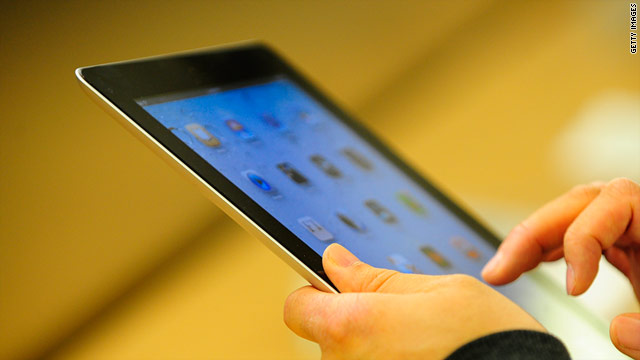
(Business Insider) -- Apple and CEO Steve Jobs have celebrated a string of huge hits over the past several years, including the iPhone, the iPad and the MacBook Air.
Reviews have been mostly glowing, sales have been strong and investors have cheered, sending the stock up 40% over the past 12 months. Apple, which was struggling a decade ago, is now the world's most admired and highly valued tech company.
But Apple is not perfect. In fact, the company has several weaknesses to address:
1) The cloud. Apple has been bragging about how the iPad 2 is a "post-PC" device, but you still need to plug it into a computer to activate and sync it. The easiest way to get photos off your iPhone is to email them to yourself. You still can't sync your iTunes music over Wi-Fi or 3G. This is a shame.
Apple needs to think about the cloud the way Google does -- as the future of mobile services. You shouldn't be tied to a USB cord to access files. You shouldn't need a PC to use a "post-PC" iPad. You shouldn't have to email a map link from your computer to your iPhone.
Perhaps this is part of Apple's new version of iOS, due sometime this year.
The company has a huge new data center in North Carolina and can't be blind to the fact that other companies -- Dropbox, Amazon, Google, etc. -- are doing very cool things with the cloud.
But for now, Apple is still weak here -- MobileMe and Apple's iOS push notifications not withstanding.
2) Social. Apple has tried to do "social" a bit with Ping, its social network based around iTunes music, and GameCenter, its social gaming service. They aren't huge hits. Apple has not been able to go as deep integrating Facebook or other social networks into its products as some Android devices or Microsoft's Windows Phone 7 have.
Some of this could be to reduce Apple's dependence on other companies, so the iPhone is more reliable. But it seems that Apple and Steve Jobs don't really get social, and don't see its value. That could burn them in the long run.
Or perhaps, again, this could be addressed in the next version of iOS. For instance, Apple could go a long way by making the iPhone's built-in Photos app more social, like the popular Instagram app. And Apple's marketing boss Phil Schiller is all over Instagram. So it's not like the company isn't highly aware of what's out there.
This isn't to say that Apple should replicate Facebook, or even try to build its own general-purpose social network. But integrating your existing online social connections could be useful for many of Apple's products, ranging from the iPhone's address book to the App Store to photo sharing. So it's time for Apple to do more here.
3) The living room. The new Apple TV just got a small upgrade, in the form of live video streaming for MLB and NBA games. But it's still the weakest of Apple's products, with a relatively limited selection of video. And it's definitely not something TV companies like Comcast or DirecTV are worried about.
Apple could improve Apple TV with an app store within the next year or so -- gaming could be big! -- and more video content sooner. But it's a challenge, because this is a situation where Apple has to decide between being a good platform -- and allowing rival companies like Netflix, Hulu, or Amazon to thrive -- and being a dominant content seller by keeping an iTunes monopoly.
The good news for Apple is that no one else is really putting up a fight here yet. Google TV isn't a big success, while Boxee, Roku and TiVo Premiere haven't caught on with mainstream consumers. So Apple can take its time. Heck, Apple may even come out with an actual television someday.
Also, these are all areas where Apple is relatively in control of its destiny, and can make improvements.
There are some other areas where Apple is vulnerable, such as the threat posed by Google's Android system, and possible production problems because of the earthquake and tsunami in Japan. But that's a different list.

Thursday, April 7, 2011

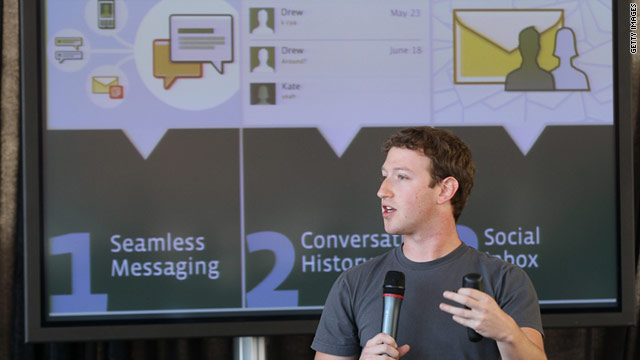
Messages feature among Facebook's 'biggest undertakings'

Palo Alto, California (CNN) -- The goal of Facebook's new messaging client is to simplify private communication, but as it turns out, executing that has been astoundingly complicated.
Facebook announced and began rolling out the new version of Messages in November, and even now, the company has yet to activate the feature for all of its more than 500 million users.
Reaching everyone could take several more weeks, said Andrew Bosworth, a Facebook director who oversees product development. At least one-fifth of all Facebook users now have access to the feature, and millions more are added daily, said people overseeing the release.
If Facebook engineers could have flipped a switch and activated the feature for every account simultaneously, Bosworth would have given the order without hesitation, he said.
But the new Messages entails more than just dropping the subject line from correspondences and giving everyone a chic @facebook.com e-mail address.
It's an amalgamation of very different communication media. Facebook's system needed to be able to connect with cellular carriers' networks for its text messaging component, operate on standard e-mail channels, and interface with instant-messaging conduits.
Once all that was figured out, Facebook developers went to work on promised features that will be added later. One such element is IMAP access, so that people can pull up their Facebook messages from software like Microsoft's Outlook.
For the Messages project, Facebook assembled a team that consists of 15 to 20 people at a given time, executives said. At the time, it was the largest product-focused group the company had ever formed, they said.
"This is probably one of the biggest undertakings we have ever taken on," said Joel Seligstein, a lead engineer on Messages.
The Messages team grew last month when Facebook acquired a fast-growing startup called Beluga, which makes a group-messaging service. Facebook will maintain development on Beluga for now and plans to integrate the information sent over the service into Messages within the next six months, Bosworth said.
With that purchase, Facebook has staked a claim in the up-and-coming mobile messaging arena. Managers are still deciding whether it makes sense to have a dedicated app for quickly sending messages in addition to the all-in-one Facebook software, Bosworth said.
"The fact that they're one click from the home screen is a valuable trait," Bosworth said of Beluga. "We see them as very consistent with what we've been doing -- real-time, shorter messages, more social, more contextualized. They've done a great job of taking that idea and doing something new and different with it."
In the years since Facebook first made a play to be your inbox, many new communications tools have appeared. Seligstein is the only developer involved in the new Messages who also worked on the original, which launched during Facebook's early days, he said. Based on discussions, he's often the one most critical of it.
"It had the wrong features," Seligstein said. "We were missing a lot of the communicating that was happening."
A lot of those shortcomings were conceptual, developers and executives said. Even the most minute components slowed the process of composing a message and needed rethinking, including having a subject line and the size of the text box. "People just naturally wanted to fill the box," Seligstein said.
So they took their cues from the rise of mobile and instant messaging. Facebook's chat feature, which is being integrated into Messages, is among the most used functions on the site, Bosworth said.
"It's not about establishing relationships. Relationships are assumed in this world," Bosworth said. "Our relationship is established. I don't need to say: 'Hope you are well; how's the kids?' ... If something is wrong with your kids, I'd know. I'd see it on Facebook."
Once those hoops vanished, Facebook observed that people using the new service were sending shorter messages and at a much higher frequency, Seligstein said. In essence, the design changes had morphed behavior, and that's no accident.
"We were expecting this to happen," Karthik Ranganathan, a senior engineer on the project, said flatly.
As the story goes, the impetus for redesigning Messages was a conversation between Facebook CEO Mark Zuckerberg and some high school girls during a Thanksgiving weekend, not long after the first version of Messages was released. "E-mail is too slow," Zuckerberg recalled them saying.
"That was probably the first time in his life that he felt like the old guy in the room," Bosworth, a longtime collaborator of Zuckerberg's, said with a laugh.
From that experience, Zuckerberg was determined to solve a problem he wasn't aware existed.
"We don't think that a modern messaging system is going to be e-mail," Zuckerberg said during the news conference last year. "We think that we should take features away from messaging. We think it should be minimal."
But in the time since cementing the concept and in the months since beginning the rollout with much fanfare, engineers have run into some monumental hurdles.
Amid the big launch, they were taking the opportunity to clean up their databases and build a smoother bedrock. One false step and countless messages could be lost. For that reason, they kept many backups and added new users carefully.
"The amount of infrastructure we had to build for this is huge," said Prashant Malik, a Facebook senior engineer. "There are many unknowns."
Beyond the technological feats, Messages can be seen as a gesture to open communication beyond the gates of Facebook.
Traditionally, the products Facebook has built are about sharing things among people you know and within the confines of Facebook's large network. The Facebook service, Bosworth said, "is friend-centric. But communication is bigger than that."
"We've discovered new, cool things that we can do with communication that we didn't know about six months ago," he said. "This is a classic Facebook thing, man. We always want to evolve."

AT&T vs. Verizon iPhone: pretty equal, except for those dropped calls

(ArsTechnica) -- The latest mobile phone user survey from market research firm ChangeWave reveals similar levels of overall satisfaction between iPhone 4 users on Verizon versus those on AT&T.
However, Verizon iPhone 4 users seem to suffer from dropped calls far less often than their AT&T peers, supporting early anecdotal evidence from Verizon iPhone users.
"In terms of overall satisfaction the two iPhones are virtually indistinguishable," according to ChangeWave vice president of research Paul Carton. In March, 82 percent of Verizon iPhone 4 users reported being very satisfied with the device, while 80 percent of AT&T iPhone users reported the same. Only two percent reported any dissatisfaction with the device on either carrier.
Half of Verizon smartphone users mulling switch to iPhone
That doesn't mean users on Verizon don't see at least one significant benefit: fewer dropped calls. Verizon iPhone 4 users reported a dropped call rate of 1.8 percent. AT&T iPhone 4 users, in contrast, had a dropped call rate of 4.8 percent -- more than double that of Verizon iPhone 4 users.
That difference isn't limited to iPhones, though. Comparing dropped call rates for all mobile users on all four carriers, Verizon users reported just 1.4 percent of calls were dropped unexpectedly, while AT&T users reported a 4.6 percent rate. T-Mobile and Sprint users reported rates of 2.3 percent and 2.7 percent respectively.
16% of AT&T customers ready to jump ship for Verizon iPhone
A look at ChangeWave's historical data suggests that AT&T is actually improving. At the height of the iPhone 4 release, AT&T users were reporting dropped call rates as high as 6 percent -- the highest rate recorded by ChangeWave's survey since tracking began in 2008. At the same time, however, Verizon has also been improving. The 1.4 percent rate is the lowest recorded since 2008.
While our own testing didn't reveal much of a difference in dropped calls, ChangeWave's results jibe with the accepted dogma about using an iPhone on Verizon versus AT&T -- namely, that dropped calls were much less of a problem.
If voice calls are a primary reason you use a smartphone, Verizon is likely to be a better choice if you don't want your calls to unexpectedly cut themselves short.

iPhone 5 release date: Big buzz, few facts

(CNN) -- It doesn't take much to get the tech world talking about the iPhone.
The internet has swirled with speculation in recent weeks about a release date for Apple's iPhone 5, and even whether the company will update its iconic smartphone at all this year.
Now, the most tenuous of news reports has ramped the talk up again.
A South Korean news site reported this week that Apple plans to release the phone in the fourth week of June. According to a translation by the MacRumors site, ETNews.co.kr reported that "Apple has confirmed" that time frame.
There are a few problems here:
It seems highly unlikely that the typically tight-lipped Apple would have confirmed a release date. The report also says the phone will be released in South Korea the same day it goes on sale in the United States.
Possible. But, for comparison's sake, the iPhone 4 was released there about three months after its U.S. debut.
And, for what it may or may not be worth, the South Korean report appeared on April 1.
But as Western news outlets jumped on the report, excitement spread.
The words "iPhone 5 release date" were briefly at the top of Google's Hot Topics list Tuesday morning, and multiple U.S. blogs were following up the MacRumors report -- albeit skeptically, in most cases.
The original iPhone, the iPhone 3GS and the iPhone 4 all had June releases. The iPhone 3G was released in early July. But reports have said that Apple plans to focus specifically on software, not hardware, at its Worldwide Developers Conference, scheduled from June 6-10 this year.
Apple did not immediately respond to a request for comment.
One X-factor here could be the earthquake and tsunami in Japan.
Earlier this week, comments by Sony CEO Sir Howard Stringer suggested that his company is making a camera sensor for the new iPhone. He said sensors for Apple will be delayed because of damage to 15 of Sony's plants in Japan.
It's also hard to know how Apple CEO Steve Jobs' medical leave of absence has impacted development of the newest version of the phone.
So the only thing that seems certain about when Apple will release the next version of the iPhone is ... that nobody in the tech media really knows.

Thursday, March 10, 2011

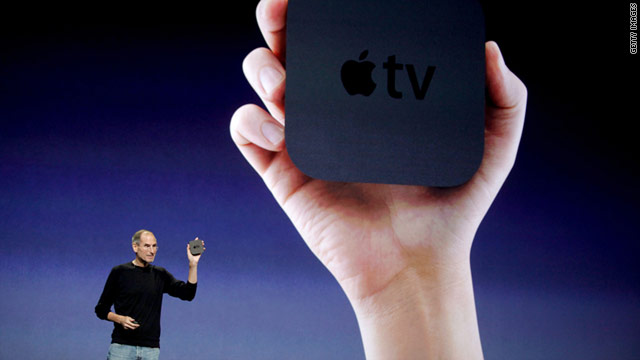
Apple TV update boasts full MLB, NBA streaming

(WIRED) -- If you're a die-hard baseball or basketball fan, Steve Jobs just made your day.

With its latest software update for Apple TV, Apple is now offering easy streaming of MLB and NBA games directly through its $100 media-streaming unit. All you need an active subscription to either service, and you can have unlimited access to every baseball and basketball game through your Apple TV, subject to local blackout rules, of course.

MLB.TV streaming had previously been available for Roku and PlayStation 3, but built-in Apple TV functionality brings an ease of use and integration previously unseen.

There are two subscription models for MLB.TV, $100 a year for standard and $120 for the premium offering (which boasts home and away broadcasts, in-game DVR capability, and different camera options).

NBA League Pass has also been available for online streaming and directly mobile apps for Android and iOS, and the Apple TV bundle comes in two sizes: a $65 option if you pick seven teams to watch, as well as $100 for unlimited streaming.

(Although, real penny-pinchers could just purchase the mobile version, which costs $70 less than the Apple TV version, and just AirPlay that to your HDTV, another new feature of iOS 4.3.)

How much more business will the move bring in for Apple, MLB and the NBA? Millions of dollars over time, although much more Apple TV penetration will be needed before that comes to bear.

(It's been less than three months since the company announced sales of 1 million Apple TVs.)

But if you're a sports fan who has been hesitant to plunk down a Benjamin for Apple's media-streaming marvel, this update just made your resistance all the more futile.

Tuesday, February 22, 2011

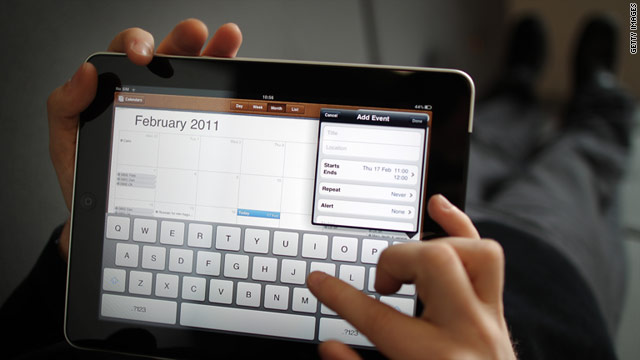
Why nobody can match the iPad's price

(WIRED) -- When Steve Jobs introduced the iPad last January, the biggest surprise wasn't the actual product. (Many shrugged and called the iPad a "bigger iPhone.") It was the price: Just $500.

Nobody expected that number, perhaps because Apple has traditionally aimed at the high end of the mobile computer market with MacBooks marked $1,000 and up. And perhaps we were also thrown off because Apple execs repeatedly told investors they couldn't produce a $500 computer that wasn't a piece of junk.

But Apple did meet that price, and the iPad isn't junk. The iPad is still the first, and best-selling, product of its kind. Competitors, meanwhile, are having trouble hitting that $500 sweet spot.

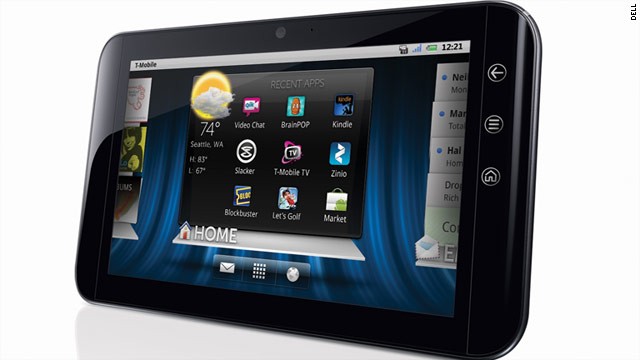
Motorola's Xoom tablet is debuting in the United States with an $800 price tag. (To be fair, the most comparable iPad is $730 -- but there's no $500 Xoom planned, and the lack of a low-end entry point will hurt Motorola.) Samsung's Galaxy Tab, with a relatively puny 7-inch screen, costs $600 without a contract.

Why is it so hard to get to a lower starting price? And how was Apple able to get there?

Jason Hiner of Tech Republic suggests it largely has to do with Apple's retail strategy. Apple now has 300 retail stores worldwide selling iPads directly to customers. That's advantageous, because if the iPad were primarily sold at third-party retail stores, a big chunk of profit would go to those retailers, Hiner reasons.

Apple has partnered with a few retail chains such as Best Buy and Walmart, but those stores always seem to get a small number of units in stock. Hiner rationalizes that the true purpose of these partnerships is probably to help spread the marketing message, not so much to sell iPads.

"The company can swallow the bitter pill of hardly making any money from iPad sales through its retail partners because it can feast off the fat profits it makes when customers buy directly through its retail outlets and the web store," Hiner says. "However, companies like Motorola, HP, and Samsung have to make all of their profit by selling their tablets wholesale to retailer partners."

The retail advantage is a reasonable theory, but Hiner neglects to mention the high overhead costs that Apple must pay handsomely for each of its 300 stores. To Hiner's credit, Apple running its own stores does present clear benefits: the customer outreach is enormous, and of course, in Apple stores, Apple products don't have to compete with gadgets sold by rivals on other shelves.

But when we try to decipher why the iPad costs $500, we have to consider the sum of all parts, not just the retail strategy.

Apple is the most vertically integrated company in the world. In addition to operating its own retail chains, all Apple hardware and software are designed in-house, and Apple also runs its own digital content store, iTunes.

Designing in-house means Apple doesn't have to pay licensing fees to third parties to use their intellectual property. For instance, the A4 chip inside the iPad is based on technology developed and owned by Apple (not Intel, AMD or Nvidia). The operating system is Apple's own, not something licensed from Microsoft or Google.
Why do you think Hewlett-Packard bought Palm to make the TouchPad? HP wanted ownership of a mobile operating system in-house to take control of its own mobile destiny and stop being so reliant on Microsoft (which, to this day, doesn't have a credible tablet strategy).

On the iTunes media platform, Apple takes a cut of each sale made through each of its digital storefronts: the App Store, iBooks and iTunes music and video. iBooks still has a long way to go before it's anywhere near as big as Amazon, but the App Store and iTunes are the most successful digital media stores of their kind.

At the end of the day, the iPad might be worth well above $500 for all we know. (Part estimates made by component analysts such as iSuppli aren't very useful because they fail to measure costs of R&D and other factors.) It's most likely that Apple can afford to absorb the costs of producing and selling the iPad because of the tenacious ecosystem backing it, and also because it has such tight oversight over every aspect of the company to control price.

That's what it all boils down to: ecosystems and control. Competitors are struggling to match the $500 price point because they aren't as fully integrated as Apple, in terms of retail strategy, a digital content market, hardware and software engineering -- everything.

As Steve Jobs famously put it one day, "Apple is the last company in our industry that creates the whole widget." Competitors are having trouble beating the iPad widget.