Friday, January 14, 2011

Are we too obsessed with Facebook?

(Mashable) -- Facebook profiles are like belly buttons: Everybody's got one.

Perhaps that statement's still a bit of an exaggeration, but by the numbers, we (that is, Internet users around the globe) are becoming more obsessed with Facebook by the day.

One out of every 13 Earthlings and three out of four Americans is on Facebook, and one out of 26 signs into Facebook on a daily basis.

We could rattle off stats like until the cows come home, but instead, we'd like to show you this fascinating infographic from SocialHype and OnlineSchools.org.

Here, in a visual nutshell, are some highlights about Facebook usage, 2010 trends, adoption numbers and a great deal more.

Take a good look at this information (or click here for the full-size version), and in the comments, let us know what you think about our global fascination with Facebook.


Is Facebook an amazing connective medium? A plague that preys on the easily addicted? A little bit of both, or something else entirely?

Thursday, January 13, 2011

Gift card exchange websites ring up post-holiday sales

(CNN) -- Thanks to a rising aftermarket for gift cards, someone who got, say, a $50 credit to Macy's over the holidays can quickly turn that into a credit for Amazon.com or even a check.

Websites that let users exchange unwanted gift certificates gained major traction after Christmas, as more consumers went online to find a preferred gift, or even cash.

"What we've seen is a trend that begins to accelerate in late November and continues all the way through the holidays with a specific and significant spike post-Christmas," said Bruce Bower, the CEO of Plastic Jungle, one of the most popular websites for exchanging gift cards.

In December, Plastic Jungle experienced a sixfold increase in both the selling and buying of gift cards, compared with the same period in 2009. The company sold more than $10 million in gift cards last year.

For Plastic Jungle and similar sites, the post-holiday season capped a frenetic monthlong marathon that can set the tone for business the following year.

But consumers are finding they have to give up a few plastic dollars in the transaction. Such sites charge a fee to swap gift cards, and if you want cash, you'll get less than the card is worth.


If you still have unwanted holiday gift cards lying around and want to exchange them, the process works like this:

You can register gift cards you want to sell with Plastic Jungle or other sites. The system calculates how much it will pay out based on the store and the value of the card.

Then, you'll be asked to mail the card using a prepaid envelope. Plastic Jungle partners with some retailers that verify the cards instantly and automatically pay to a PayPal account. Shoppers can search the site and get cards at discounted prices.

Plastic Jungle has been around since 2006, when gift cards first achieved their still-current status as the top holiday gift category in the U.S., according to a report by the National Retail Federation. Americans were expected to spend an average of $145.61 on gift cards during the 2010 holiday season, a 4% increase from 2009, according to the survey.

But Plastic Jungle is seeing new rivals emerge, as well as consumers flocking to general online marketplaces like eBay and Craigslist.

eBay lists hundreds of cards for popular retailers that receive bids for pennies less than -- or, in some cases, more than -- the certificate's value. But for those looking to hawk gift cards, eBay's auctioneer pool can be hostile to sellers who haven't already built a reputation on their profiles.

And Craigslist, the free classified ads site, has no mechanism for verifying the card's or the seller's legitimacy.

Other services, like GiftCards.com and CardWoo, offer guarantees to buyers that are similar to Plastic Jungle's -- assurance that a card will work and come with the expected value.

For sellers, Swapagift.com partners with brick-and-mortar stores in many cities to provide drop-off locations, so customers don't have to deal with the Postal Service.

But the potential for crooks using these systems to cash in from stolen credit cards could create problems for these businesses, said Dan Horne, a marketing professor at Providence College's business school in Rhode Island.

Horne said he "can't really figure out the business model" for these companies, "given the [narrow profit] margins and the competition."

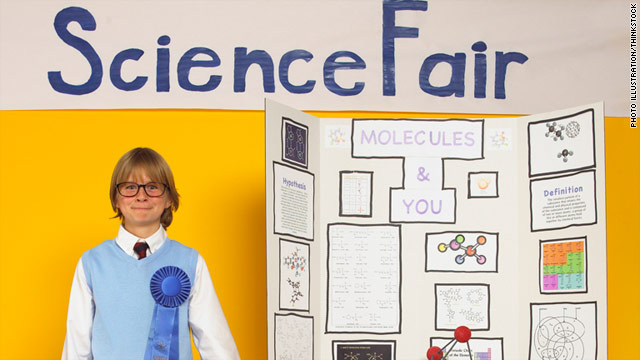
Google launches first-ever global online science fair

(Fast Company) -- For years, employees at Google have suggested a project near and dear to their nerd hearts: a Google-led science fair.
"It's come up over and over and over again," says Cristin Frodella, a senior product marketing manager in education at Google.
After all, many a Googler has fond childhood memories of explaining the genius of his or her biology experiment to passersby in a school gym. (Frodella and her best friend trained hamsters to ask for food by ringing a bell.)
Today those Googlers and budding scientists worldwide should be ecstatic.
The company launched Google Science Fair, the first global online science competition. It's open to full-time students ages 13 to 18, who are encouraged to use the panoply of Google products to record and share their work.
"We want to let kids use our online tools so they can participate from anywhere in world," Frodella tells Fast Company. "They may be home schooled or live in a remote place or not have a physical science fair in their area."
They do, however, need an Internet connection.
This is a far cry from your typical local science fair. Google's competition kicked off this morning at its New York offices with some showy science courtesy of Syyn Labs, the company behind the Rube Goldberg machine for last year's OK Go viral hit "This Too Shall Pass."
Syyn's machine for Google fired a laser, activating a rover that lifted a red curtain draped over the fair's logo. Then Google brought a riveting cast of scientists on stage to inspire the 100 or so local students in attendance.
Google's partners include National Geographic, CERN, Scientific American, and Lego. Consequently, the judges are not your eighth-grade biology teacher and the football coach who took a freshman chemistry course. They include Vint Cerf, its chief Internet evangelist and one of the fathers of the Web, and National Geographic's explorer-in-residence, the geneticist Spencer Wells.
Cerf gave a brief history of the Internet, telling students that breakthroughs of that magnitude don't "just happen." They require scientists asking questions, forming hypothesis, failing, and then asking more questions. If it seems to students as if all the good stuff has already been discovered, Cerf said, remember that "95% of the universe is unknown to us. It's all Tabula rasa."
William Kamkwamba, a self-taught scientist from Malawi, Africa, talked about the direct impact that science can have, not just on society at large, but on an individual community.
From reading a library book, Kamkwamba, the son of a farmer and one of seven kids, learned how to build a wind mill, which powers his family's house and pumps water in an impoverished area. He taught his neighbors how to build wind mills, too, which have transformed schools and improved conditions in the village.
If his poignant story wasn't enough to spur the young scientists in the room and those watching the live stream of the event online, then that of Tesca Fitzgerald, a 15-year-old dynamo from Portland, Oregon, most likely did.
She began programming computers at age 5, enrolled in community college at 12, and last year was recognized for her skills by the National Center for Women and Information Technology.

One of Fitzgerald's experiments, using artificial intelligence to route robots and assist nurses in a local V.A. hospital, serves as the model project on the Google Science Fair site.
The goal of the Google Science Fair isn't just to give great prizes, including a trip to the Galapagos Islands and $110,000 in scholarships. It's to foster more interest in science worldwide and to come up with much-needed solutions to local and global problems -- if not now, then eventually.
"We want kids to make a difference in the world," says Frodella. "They can be agents of change."
The deadline for submissions is April 4. In July, 15 finalists will attend the awards ceremony at Google headquarters in Mountain View, California. Visit Google Science Fair to learn more.

AT&T bringing 'hot spot' feature to Android and maybe iPhone too

(CNN) -- AT&T has been slow to adopt a feature that lets customers share a smartphone data signal wirelessly to other gadgets and computers.

But a mobile hot spot feature is coming to at least two new AT&T phones running Google's Android operating system. The carrier is also mulling whether it will add the ability to Apple's iPhone through a software update.

Verizon Wireless says its iPhone 4 models, which come out February 10, will have the hot spot feature.

The next version of the iPhone's operating system, iOS 4.3, will have that ability built in, say developers who were provided with access to a beta version. But it's unclear whether AT&T will allow customers to make use of the feature.

"It's something we're taking a look at," said AT&T spokesman Mark Siegel. He declined to comment on negotiations with Apple regarding the feature's deployment.

Once the hot spot feature is enabled, a phone creates its own Wi-Fi access point. Then as many as five devices, usually, such as laptops, iPods, Kindles or other Wi-Fi-enabled electronics, can get online. Enabling the feature generally reduces the phone's battery more quickly.

HTC's Inspire 4G and Motorola's Atrix 4G, two upcoming AT&T Android phones, will allow owners to subscribe to a more expensive data plan in order to utilize mobile hot spot.


Some AT&T phones, including the iPhone, offer a feature called tethering. This uses a phone's USB cable or a Bluetooth connection to share the internet connection to a single computer. The extra monthly fee for tethering is comparable to what AT&T will charge for hot spot.

T-Mobile USA offered a free hot spot feature on Google's Nexus One. However, a T-Mobile spokesman said in June that usage of that is "not something the company encourages." Now, T-Mobile offers the feature, with an upgraded data plan, to MyTouch 4G owners.

Sprint Nextel's Evo and Verizon's Droid phones, among others, can act as hot spots.

For Verizon's 3G phones, the internet signal is cut -- and the connected devices dropped -- when on a phone call. That's a limitation of the type of 3G network Verizon uses, but it shouldn't affect the carrier's upcoming 4G phones.

Verizon, with Mi-Fi, was one of the first carriers out of the gate to offer standalone hardware that connects to its wireless data network and shares that signal with other devices.

AT&T, which has perpetually struggled to meet data demand from iPhone customers in the last three years, began selling a Mi-Fi device in November -- more than a year after competitors.

As AT&T rolls out faster networks, including 4G infrastructure with speeds to match Verizon's later this year, the second-largest U.S. carrier by subscribers is finally ready to encourage heavier data usage. That's especially an attractive proposition for the company now that it has a tiered pricing plan in place to charge heavy users more.

Facebook to show AMBER Alerts

Washington (CNN) -- The child-abduction alert system used by law enforcement, broadcasters and transportation departments is now available on Facebook.
AMBER Alerts have previously been available to many users via their local law enforcement Facebook pages.
But now, Facebook users can receive the announcements directly from state AMBER Alert pages, by choosing which state's alerts they want to see. The District of Columbia and the U.S. Territories also each have an alert page.
"As we all know, social networking has few boundaries, and now AMBER Alerts will benefit from that reach," said Laurie Robinson, the National AMBER Coordinator for the Department of Justice.
The AMBER (America's Missing: Broadcast Emergency Response) Alert system started as an agreement between broadcasters and law enforcement agencies to quickly release information to the public on child abductions so citizens can assist in the search for the child.
It is named for Amber Hagerman, a 9-year-old from Arlington, Texas, who was kidnapped and murdered in 1996. The Facebook announcement comes on the eve of the 15th anniversary of her abduction.
Facebook users who want to receive the alerts must will sign up at http://apps.facebook.com/amber_alert/.
Ernie Allen, president of the National Center for Missing and Exploited Children, said designers of the program wanted to be sensitive to people who would see the alerts as spam, so users must sign up to receive the alerts.
Once they receive a bulletin, Facebook users can easily share it with their Facebook friends.

An estimated 800,000 children are reported missing every year. The AMBER Alert program has been credited with the recovery of 525 children since it began.

Wednesday, January 12, 2011

Why there's no 4G in Verizon's iPhone 4

(CNN) -- Just a few days after Verizon announced a slew of new 4G phones and built hype for its recently launched 4G network, executives from the largest U.S. cell carrier announced that it would finally get the iPhone.

But it's a 3G version.

And because it runs only on Verizon Wireless' older CDMA network, not the fourth-generation technology, users won't be able to make phone calls and connect to the internet at the same time.

The iPhone 4 will be available in stores February 10, with pre-orders for Verizon customers beginning a week before, the two companies announced in New York on Tuesday.

"The number one question I've gotten is: When will the iPhone work on Verizon?" Apple COO Tim Cook said.

Perhaps the new question he'll get will involve an iPhone 4G. Cook got one of those immediately after the announcement, during a question-and-answer session with reporters.

"Verizon customers told us they want the iPhone now," Cook said, explaining why the carrier will begin selling a 3G version first. The first batch of chips designed for Verizon's 4G network would require Apple to rework the phone's casing and "force design changes we wouldn't make," he said.

Last week at the Consumer Electronics Show, Verizon Wireless said it will have 10 devices that take advantage of its faster 4G network, including four phones, by midyear.

Motorola's Xoom tablet, which is coming out in the next few months, will have only a 3G chip to start, but owners will be able to upgrade to 4G at Verizon stores later in the year.

Verizon and Apple gave no indication that the Verizon iPhone 4 can be upgraded. However, images on tech blogs Tuesday suggest that some changes appear to have been made to the phone's casing, including an extra ridge in the top corner.

Apple traditionally releases new iPhones during the summer. When asked when an upgraded version of the phone for Verizon would debut, Cook declined to comment.

By launching an iPhone with 3G first, Verizon may be playing it safe in anticipation of an upgraded phone later, one analyst said.
"Verizon has a very large, very deep CDMA network, whereas their 4G LTE network is still relatively new, not completely pervasive and somewhat unproven," said Dan Hays, a consultant for PRTM who works with major U.S. carriers but declined to say which ones because of non-disclosure agreements. "I think that this opens the door for Apple to have the iPhone 5 be a 4G device."


Apple's partnership with Verizon involves a "multiyear, non-exclusive deal," Cook said Tuesday. "We've been looking forward to today for a long time."

Verizon COO Lowell McAdam said talks with Apple began in 2008. The pair has been testing the phone for a year, McAdam said.

"We have a tremendous 3G network," Verizon Wireless CEO Dan Mead said. He said Verizon hasn't identified a problem with the antenna, which plagued the AT&T model, on its version of the iPhone.

Like on AT&T, the Verizon iPhone will cost $200 for the 16-gigabyte version and $300 for 32 gigabytes.

Verizon did not announce service pricing or say whether customers would be able to purchase an unlimited data plan.

AT&T, which is now no longer the exclusive U.S. carrier for the iPhone, released a statement Tuesday saying Verizon's network may produce slower download speeds and poorer battery life. The statement also pointed out that you can't talk and Web-surf on the Verizon phone at the same time.

"The fact that you can't do voice and data simultaneously on CDMA gives an opening to AT&T for advertising," analyst Hays said. In fact, AT&T and Apple have run commercials touting the ability to talk and access data at the same time.

"I think that Apple and Verizon's choice of using the CDMA network for the initial launch of the Verizon iPhone was actually very much anticipated," Hays said. The first iPhone, released in 2007, could access only AT&T's 2G Edge network.

Because the hardware is CDMA-only, the Verizon iPhone may be impractical for international travelers. AT&T runs on a GSM network, which is common around the world. By contrast, CDMA is not widespread overseas.

However, the 2G network technology Verizon uses is also used in parts of Asia. Apple could sell these models to carriers there, whereas a dual-band handset might not as easily recoup the costs to make it, said Tina Teng, an iSuppli wireless-communications analyst.

Verizon Wireless sells 10 "global-ready" smartphones that pack GSM chips in addition to Verizon's CDMA. Verizon and Apple did not say whether the new iPhone 4 would have a GSM chip, but it's unlikely. Verizon says the iPhone 4 can be used to access data in more than 20 countries, though plans aren't cheap.

"I think that if there was (GSM inside), they would have said so," Hays said. "I didn't expect a world-phone version. I think that would be uncharacteristic for Apple. They tend to have very tightly designed solutions."

Verizon iPhone: The big questions

NEW YORK (CNNMoney) -- After years of speculation and rumor, the big day is here: The anxiously awaited unveiling of a Verizon iPhone is expected to take place Tuesday morning -- at 11 a.m. on 1/11/11, to be exact.

On Apple's (AAPL, Fortune 500) end, the iPhone has been a huge success. The company has sold more than 70 million iPhones since the device's launch in 2007. In its its fiscal fourth quarter it sold more than 14.1 million, up 91% from a year earlier.
But for AT&T (T, Fortune 500) -- currently the iPhone's sole U.S. carrier -- the exclusive contract has come at a price. Customers have complained in droves about awful service on their iPhones, culminating in scathing Consumer Reports piece in December that labeled AT&T the worst phone carrier out there.
That brings us to our first question ahead of Tuesday's event.

Will Verizon's network succeed for the iPhone where AT&T's has failed?

It's an open question, and after years of suffering on its own through iPhone users' data demands, AT&T would love to see another network stagger.

"Verizon's network hasn't been battle-tested yet, so you don't know if they can handle the data load or not," AT&T spokesman Larry Solomon told Fortune recently.

But all the wireless phone carriers -- including both Verizon and AT&T -- have been spending billions to build our their capacity. Verizon has had lots of time to warm up for this challenge.

Will the iPhone support Verizon's LTE 4G network, or its CDMA 3G network?

Verizon's new 4G network is just starting its rollout. If the iPhone has to rely on the older CDMA network, that carries some significant drawbacks. Most glaringly: customers wouldn't be able to chat on the phone and surf the Web simultaneously, as they can on AT&T's iPhone.


Data hounds are waiting eagerly for the details.

Will Verizon let iPhone customers sign up for the unlimited data plan?

Back in June, AT&T announced new 3G pricing plans that made iPhone and iPad bills less expensive for most customers, but also ended the carrier's unlimited data option. New buyers can pay either $15 for 200 MB a month or $25 for 2 GB, replacing the carrier's previous $30 all-you-can-download plan.

Verizon currently offers its smartphone customers unlimited data for $30 a month. Will it extend that plan to the iPhone? Stay tuned.

When will the Verizon iPhone be available to customers?

By the end of January, if a Monday Wall Street Journal article and a June piece from Bloomberg are correct.

How much will the Verizon iPhone cost? And will the company offer any incentives to AT&T iPhone customers?

With a two-year AT&T contract, the iPhone 4 costs $199 for a 16 GB device and $299 for the 32 GB version. Verizon's pricing is expected to be the same.

With such a high-demand product, Verizon probably won't feel the need to offer any incentives for AT&T customers looking to switch over. Those who make the jump will have to pay a $325 penalty for termination-of-contract, and they could be subject to other fees.

Will a Verizon iPhone kill AT&T?

Most of the conventional wisdom out there says yes, but many industry analysts say no. The company has locked in millions of customers who upgraded over the past few months.

Furthermore, while lots of customers complain about AT&T, relatively few are likely to follow through with the hassle of switching. Yankee Group estimates that 2.5 million AT&T iPhone customers will defect to Verizon in 2011 -- which represents just 3% of AT&T's base of 93 million customers.

Will Steve Jobs be at the Verizon unveiling? Will he have a white iPhone in his hand!?!

The bright-red invitation CNNMoney received for Tuesday's event lists only Verizon president and COO Lowell McAdam as a presenter. But it's unlikely that Apple CEO Steve Jobs would miss an iPhone event. AllThingsD's sources say a Jobs appearance "isn't 100 percent assured," but it's "likely."

The white iPhone -- the tech industry's Godot -- has reportedly been thwarted by manufacturing issues. A few news outlets have reported on pale iPhones spotted in the wild, but Apple has said not to expect the fabled white device until spring 2011.